How to Build Stronger Partnerships with Contractors on Rehab Projects
Rehab projects live or die by the strength of your contractor relationships. You can have a solid scope, a well-structured budget, and strong funding in place — but if communication with the contractor breaks down, timelines slip, costs increase, and trust erodes quickly.
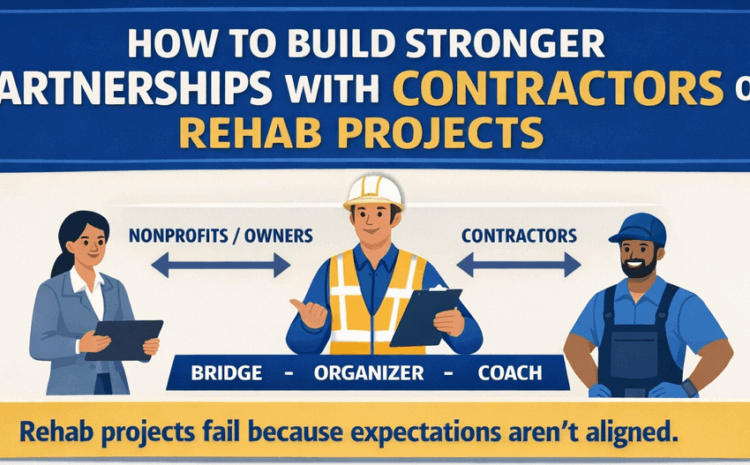
At NAFHAC, we’ve seen that the most successful rehab projects aren’t driven by luck. They’re led by consultants who act as a bridge between owners, nonprofits, and contractors — creating clear systems, setting expectations early, and managing challenges before they turn into conflicts. Here’s how to build contractor partnerships that lead to smoother, more predictable rehab projects.
1. Set Expectations in Writing Early
Strong partnerships start with clarity. Before work begins, contractors should have a clear, documented understanding of the scope, schedule, and standards.
Unclear expectations are one of the biggest causes of disputes in rehab projects — especially when hidden conditions and scope changes are involved.
✅ Tip: Use standardized Scope of Work templates to clearly outline responsibilities, deliverables, and code requirements.
Example:
“Reviewing the line-item scope and roles together before mobilization prevents most disputes before they start.”
2. Treat Contractors as Partners — Not Vendors
Contractors aren’t just executing tasks; they’re navigating real-world site conditions, inspections, labor constraints, and material availability. Treating them as partners improves communication and execution quality.
Your role as a consultant is to coordinate expectations — not to micromanage.
✅ Tip: Ask for contractor input on sequencing, scheduling, and rehab feasibility early in the process.
Example:
“What’s the most realistic timeline for this scope given current crew availability?” builds trust and better schedules.
3. Create a Consistent Communication System
Most project issues don’t come from bad intentions — they come from poor follow-up. Consistent communication keeps projects proactive instead of reactive.
A strong system includes regular check-ins, documented decisions, and shared access to information.
✅ Tip: Hold weekly site meetings and track decisions, action items, and approvals in writing.
Example:
“Let’s document today’s decisions so everyone is aligned before the next inspection.”
4. Build a Fair and Predictable Payment Process
Late or unclear payments damage contractor relationships fast. Contractors need confidence that completed work will be reviewed and paid on time.
A clear payment system protects both the contractor and the project owner.
✅ Tip: Establish payment timelines, inspection requirements, and retention terms before work begins.
Example:
“Once inspection is approved and documents are submitted, payment is processed within the agreed timeframe.”
5. Manage Change Orders Professionally
Change orders are unavoidable in rehab projects — hidden damage, code issues, and design adjustments are part of the process. What matters is how they’re handled.
A structured change order process prevents conflict and protects funding.
✅ Tip: Require written change orders that clearly document cost and time impacts before work begins.
Example:
“No additional work starts until the change order is reviewed and approved in writing.”
6. Stay Neutral When Conflicts Arise
When disagreements come up (and they will), the consultant’s role is not to take sides — it’s to keep the project compliant, safe, and moving forward.
Neutral, goal-focused communication keeps emotions from derailing progress.
✅ Tip: Reframe issues around shared outcomes like inspections, lender approval, and final payment.
Example:
“Let’s focus on what’s needed to pass inspection and release the next draw.”
7. Build Contractor Loyalty Through Consistency
The strongest rehab programs work with the same contractors repeatedly — not because they’re the cheapest, but because they’re reliable and aligned.
Contractors value predictability, fast decisions, and respect for their expertise.
✅ Tip: Maintain consistent standards and approval processes across projects.
Example:
“When contractors know what to expect from your process, performance improves across every project.”
Stronger Partnerships Lead to Stronger Communities
When consultants and contractors work in harmony, everyone benefits — lenders, borrowers, nonprofits, and the communities being served. Strong contractor relationships aren’t just about avoiding conflict; they’re about creating repeatable success, higher-quality rehab work, and more efficient use of funding.
👷♂️ Get our Contractor Collaboration Checklist inside the NAFHAC Dashboard and start building smoother, more reliable rehab project partnerships today.