
How to Find a HUD Consultant Near You: 7 Questions Loan Officers Should Ask Before Referring a Client
Loan officers and real estate agents are tracking a major shift in residential housing: buyers are increasingly looking beyond move-in-ready homes, while renovation lending continues to evolve as a practical path to homeownership.
That creates opportunity: but it also raises the stakes.
When a borrower searches for a “HUD consultant near me”, the first available name is not necessarily the right referral. A consultant who lacks current experience, communicates poorly, or misses lender documentation requirements can delay underwriting, frustrate the borrower, and damage the referring professional’s reputation.
The better approach is to use the official HUD 203(k) Consultant Lookup to identify candidates, then ask focused questions before making an introduction.
Here are seven questions every loan officer should ask.
1. Are You Active on the HUD Consultant Roster and Current With HUD Requirements?
The first step is basic verification. A legitimate hud 203k consultant should be identifiable through HUD’s official consultant lookup system.
The HUD tool allows users to search by consultant name, city, state, and status. It can provide identifying information such as the consultant’s ID and participation details. Before referring a borrower, confirm that the candidate is active and eligible to perform the relevant consultant functions.
Remember that NAFHAC membership and certification are separate from HUD approval. A strong referral candidate should be able to explain both their HUD status and any additional professional training or association credentials they maintain.
✅ Example: Ask, “May I verify your current HUD consultant ID and active status before I refer a borrower?”
✅ Tip: Save the consultant’s roster information and contact details in your referral records. Status can change, and documentation protects your process.
This simple verification step reduces avoidable risk and gives the borrower confidence from the beginning. That creates opportunity for you to become the loan officer who connects clients with qualified, accountable professionals: not just names from an internet search.
2. Do You Specialize in the Type of 203(k) Loan the Client Needs?
Not every renovation project follows the same path. A consultant who primarily handles smaller, non-structural repairs may not be the best fit for a complex Standard 203(k) project involving major systems, additions, or structural work.
Ask the candidate about their experience with both Limited 203(k) and Standard 203(k) loans. More importantly, ask how they determine which option fits the property, scope of work, borrower, and lender requirements.
A capable 203k consultant should be able to discuss:
- The expected level of documentation
- The complexity of the work write-up
- The likely inspection and draw requirements
- Contractor coordination
- Potential timing issues
- How unexpected repairs may affect the project
✅ Example: “How would you evaluate a property requiring a roof replacement, electrical upgrades, and a kitchen renovation? What would you want to know before recommending Limited or Standard 203(k)?”
✅ Tip: Do not ask the consultant to make a lending decision. Ask them to explain the project conditions and documentation implications so your lending team can structure the file appropriately.
The distinction between Limited and Standard 203(k) continues to shape borrower expectations and closing timelines. When you refer a consultant who understands the right loan structure, you increase your value as a strategic renovation-lending advisor.
3. What Does Your Work Write-Up and Feasibility Report Process Look Like?
A renovation loan depends on clear information. The consultant’s work write-up, cost estimates, specifications, and: when applicable: feasibility reporting must give the lender a reliable picture of the proposed improvements.
This is where a general home inspection mindset is not enough. A qualified hud consultant 203k should have a defined process for evaluating the property, identifying required repairs, organizing the scope of work, reviewing contractor estimates, and communicating assumptions.
Ask:
- How do you inspect the property?
- What information do you need from the borrower and contractor?
- How do you identify health, safety, and code-related concerns?
- How do you resolve differences between contractor bids and your estimates?
- What is your typical turnaround time?
- What happens if the initial scope changes?
✅ Example: “Once you visit the property, how many business days do you typically need to deliver the work write-up or feasibility-related documentation?”
✅ Tip: Ask for a sample report or redacted work write-up. You are evaluating whether the document is organized, understandable, and useful to the lender: not simply whether it is lengthy.
Clear reporting helps prevent last-minute conditions and repeated requests for clarification. That efficiency creates opportunity for you to protect the borrower’s timeline and strengthen your reputation with referral partners.
4. How Do You Handle Draw Inspections and Change Orders?
Renovation projects rarely proceed exactly as planned. Materials become unavailable, hidden conditions appear, and contractor recommendations can change after demolition.
That makes the consultant’s draw-inspection and change-order process essential.
Ask the consultant to describe how they:
- Schedule progress inspections
- Verify completed work
- Document draw recommendations
- Identify incomplete or nonconforming work
- Review proposed change orders
- Communicate cost or scope changes to the lender
- Coordinate the final inspection
A consultant should also understand that a change order is not simply an informal agreement between the borrower and contractor. It may affect the approved scope, available contingency, project timing, and lender documentation.
✅ Example: “If a contractor discovers damaged subflooring after demolition, what information do you need before recommending a change to the approved work scope?”
✅ Tip: Ask how quickly the consultant responds when a project issue threatens the borrower’s draw schedule. Responsiveness matters most when something goes wrong.
Strong draw administration keeps the project moving while preserving documentation and accountability. By referring a 203k consultant who manages change responsibly, you help borrowers avoid confusion and keep contractors productive.
5. Do You Communicate in a Lender-Friendly Way?
The best consultant in the market can still become a poor referral if communication is inconsistent.
Loan officers need documentation that is timely, organized, and easy to review. Borrowers need explanations in plain English. Contractors need clear direction about inspections, specifications, draws, and approvals.
Ask:
- Who receives project updates?
- What is the preferred communication channel?
- How quickly are emails and calls returned?
- Are reports organized consistently?
- Does the consultant identify missing information early?
- How are the borrower, lender, real estate agent, and contractor kept aligned?
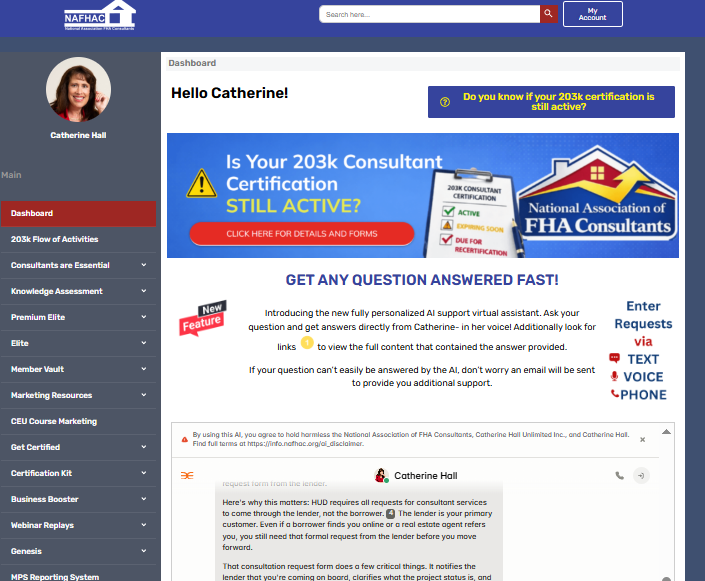
A consultant who uses professional reporting systems and structured workflows can make collaboration easier. NAFHAC members may also have access to specialized education, resources, and reporting tools designed around 203(k) project administration.
✅ Example: “Can you walk me through the communication timeline from initial referral to final draw?”
✅ Tip: Establish expectations before the referral. Confirm who is responsible for borrower education, contractor communication, report delivery, and escalation.
A reliable communication process improves the experience for everyone involved. That increases your value because your referral becomes a dependable part of the loan strategy: not another source of uncertainty.
6. Do You Have Local Knowledge of Contractors, Pricing, and Project Conditions?
National program knowledge matters, but local market knowledge often determines whether a renovation plan is realistic.
Construction costs, contractor availability, permit expectations, weather conditions, and common property issues vary significantly by location. A consultant working in Florida may approach a roof, moisture, or hurricane-resistance project differently from a consultant working in Ohio, Arizona, or Washington.
Ask whether the consultant regularly works in the borrower’s market and understands:
- Local contractor pricing
- Common property types
- Seasonal construction conditions
- Permit and inspection practices
- Typical labor availability
- Regional material costs
- Local contractor experience with FHA renovation work
You should also ask how the consultant evaluates contractors. A contractor with general remodeling experience may still need additional education about 203(k) documentation, draw procedures, and lender expectations. When appropriate, ask whether the consultant understands the role of 203k contractor certification and how contractor readiness affects project execution.
✅ Example: “What cost or contractor issues do you see most often in this county, and how do you account for them during the initial review?”
✅ Tip: Match the consultant to the property’s location and complexity: not simply to the borrower’s preferred phone number or the first result in a “hud consultant lookup.”
Local insight can prevent unrealistic budgets and avoidable delays. That gives you a stronger renovation lending team and helps you win more qualified deals.
7. What Do Lenders and Past Referral Partners Say About You?
Before referring a consultant, ask for professional references: particularly from loan officers, mortgage processors, real estate agents, and contractors who have worked with the consultant recently.
You are looking for evidence of:
- Reliable turnaround times
- Accurate reports
- Clear borrower communication
- Professional draw inspections
- Effective change-order management
- Respect for lender processes
- Consistent follow-through
Do not rely only on testimonials selected by the consultant. Ask specific questions of references:
- Did the consultant meet expected deadlines?
- Were reports complete and easy to review?
- Did the consultant communicate early when problems appeared?
- How did they handle contractor disagreements?
- Would you refer another borrower to this consultant?
NAFHAC’s Find a Consultant directory is a useful starting point for identifying consultants who are HUD-approved and NAFHAC-certified members. NAFHAC’s mission centers on competency, consistency, and community in 203(k) consulting, giving lending professionals a specialized resource beyond a general online search.
✅ Example: Use the NAFHAC consultant directory to find candidates by location, then complete your own interview and reference check.
✅ Tip: Build a short list of dependable consultants in the markets you serve. A relationship established before the next borrower needs help is far more valuable than a rushed search after a contract is signed.
A trusted network compounds over time. When you build relationships with dependable 203k consultants, you create a stronger referral engine and position yourself to win more renovation-loan opportunities.
Build the Right 203(k) Team Before the Next Referral
The opportunity in renovation lending is not just finding a hud consultant near me. It is building a reliable team that can move a borrower from property selection to completed improvements with fewer surprises.
Loan officers and real estate agents who understand how to vet a 203k hud consultant become more valuable to buyers, sellers, contractors, and referral partners. They help borrowers see possibilities in homes that other buyers overlook: and they create a more organized path from offer to closing.
Start with the official HUD consultant lookup, then use the seven questions above to evaluate experience, specialization, communication, local knowledge, and reputation.
For a more focused referral resource, explore the NAFHAC Find a Consultant directory. Loan officers and real estate professionals can also learn more about the association’s education, community, and membership resources through the NAFHAC membership page and About NAFHAC.
Want to position yourself as the professional borrowers trust when a home needs work? Start building your dependable renovation lending team today: and make your next 203k consultant referral with confidence. 🚀